
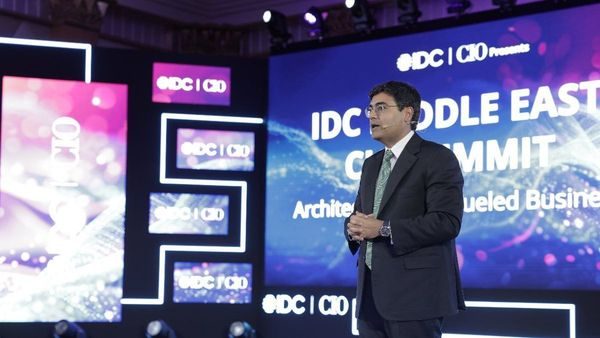
A technology leader entering a boardroom today faces a very different set of decisions than a CIO did a decade ago. Cloud platforms, artificial intelligence, cybersecurity, data infrastructure, automation, and digital customer experiences are now closely connected to business strategy. A CIO conference in Indonesia can provide a useful setting for examining these changes through practical conversations between technology leaders, business decision makers, and digital specialists.
The challenge is no longer simply deciding which technology to adopt. Leaders must determine how a new capability fits existing systems, whether employees are prepared to use it, how information will be protected, and whether the investment can produce measurable business value. These questions are becoming increasingly important as Indonesian organisations continue to develop more connected digital operations.
Indonesia’s Digital Landscape Is Evolving
Indonesia has a diverse economy with businesses operating across banking, retail, manufacturing, telecommunications, logistics, healthcare, energy, and other sectors. Each industry has different technology requirements, but many face similar challenges around connectivity, data, security, automation, and digital service delivery.
As organisations expand their digital operations, technology leaders need solutions that can scale without creating unnecessary complexity.
This makes local knowledge especially valuable. Strategies that work in one market may need to be adapted to Indonesia’s business environment, regulatory considerations, workforce conditions, and customer expectations.
AI Moves Into Everyday Business
Artificial intelligence has progressed from experimental projects to practical business applications. Organisations are exploring AI for customer support, document processing, forecasting, fraud detection, software development, marketing, analytics, and internal operations.
Yet adopting AI is not simply a matter of purchasing a platform. Leaders need to consider the quality of the information being used, how models are evaluated, who is responsible for decisions, and how sensitive data is protected.
CIOs also need to identify tasks where AI can genuinely improve outcomes. Automating a process without understanding its purpose can create new problems rather than solve existing ones. The strongest AI strategies begin with a business challenge and then determine whether AI is the appropriate solution.
Data Quality Shapes Digital Decisions
Every digital initiative depends on information. If customer records are incomplete, operational data is inconsistent, or systems cannot communicate effectively, advanced analytics and AI applications may produce unreliable results.
Data management has therefore become a strategic responsibility. Organisations need clear approaches to data ownership, access, storage, quality, governance, and security. They also need to consider how information moves between departments and applications.
Discussions at a CIO conference Indonesia can help leaders explore practical approaches to strengthening data strategies. When data becomes more reliable and accessible, leaders can make decisions with greater confidence. This can improve forecasting, resource planning, customer understanding, and operational control.
Cybersecurity Must Keep Pace
Digital growth naturally creates new security considerations. More applications, connected devices, cloud services, remote access points, and third party integrations can increase exposure to cyber threats.
Security needs to be built into technology strategy from the beginning. Identity management, access controls, monitoring, vulnerability assessment, employee awareness, and incident response all contribute to a stronger defensive position.
CIOs also need to balance security with usability. Excessive controls can make systems difficult to use, while weak controls can create unnecessary risk. The objective is a security framework that protects important assets without preventing employees and customers from accessing the services they need.
Cloud Strategy Goes Beyond Migration
Moving systems to the cloud can provide flexibility and scalability, but migration is only the beginning.
Once workloads are operating in cloud environments, organisations need to monitor costs, performance, security, availability, and resource usage. Applications may also need redesigning to take full advantage of cloud capabilities.
A strong cloud strategy should therefore begin with business requirements rather than technology preference. Leaders need to understand which workloads benefit from cloud environments, which systems require specialised treatment, and how different platforms will work together over time.
Automation Changes The Workplace
Automation can remove repetitive administrative tasks and allow employees to focus on activities requiring judgement, creativity, and communication.
However, successful automation starts with process analysis. Organisations should first identify unnecessary steps, bottlenecks, duplicated work, and sources of error. A CIO summit 2026 Jakarta can provide valuable discussions around practical automation strategies and workforce readiness.
Once the process is understood, technology can be introduced where it creates genuine improvement. This approach also makes workforce planning important. Employees may need training to work alongside automated systems, interpret new information, or take on responsibilities that require more complex decision making.
Digital Infrastructure Needs Resilience
A connected business environment depends on reliable infrastructure. An application outage, network disruption, or security incident can affect multiple departments at the same time. Resilience therefore needs to be considered at an architectural level.
Organisations can examine redundancy, backup strategies, disaster recovery, monitoring, system dependencies, and incident response capabilities. The goal is not to prevent every possible disruption, which may be unrealistic, but to reduce the impact when problems occur and restore critical services quickly.
CIOs must understand where their most important dependencies exist and which systems require the strongest protection.
Building Stronger Technology Partnerships
No organisation can develop every digital capability internally. Technology leaders frequently work with cloud providers, cybersecurity specialists, software companies, consultants, infrastructure partners, and other external organisations.
These partnerships can accelerate transformation, but they also introduce considerations around data access, integration, vendor dependency, service levels, and security.
CIOs need to evaluate partners based not only on technical capabilities but also on their ability to support long term business requirements. Clear governance and communication can help ensure that external technology relationships contribute to strategic goals rather than creating additional complexity.
Conclusion
Indonesia’s technology landscape will continue to develop as organisations adopt more connected systems, intelligent applications, cloud services, automation, and data driven processes. The opportunities are significant, but so are the responsibilities surrounding security, governance, skills, and investment. A CIO conference in Indonesia can help technology leaders explore these priorities and understand how emerging capabilities can be applied responsibly to support long term digital growth.
CIOs can benefit from environments where these issues are discussed openly and practically. Platforms such as digitalCIO 2026 – Indonesia offer technology leaders an opportunity to exchange perspectives, explore emerging priorities, and consider how digital strategies can create meaningful business outcomes.