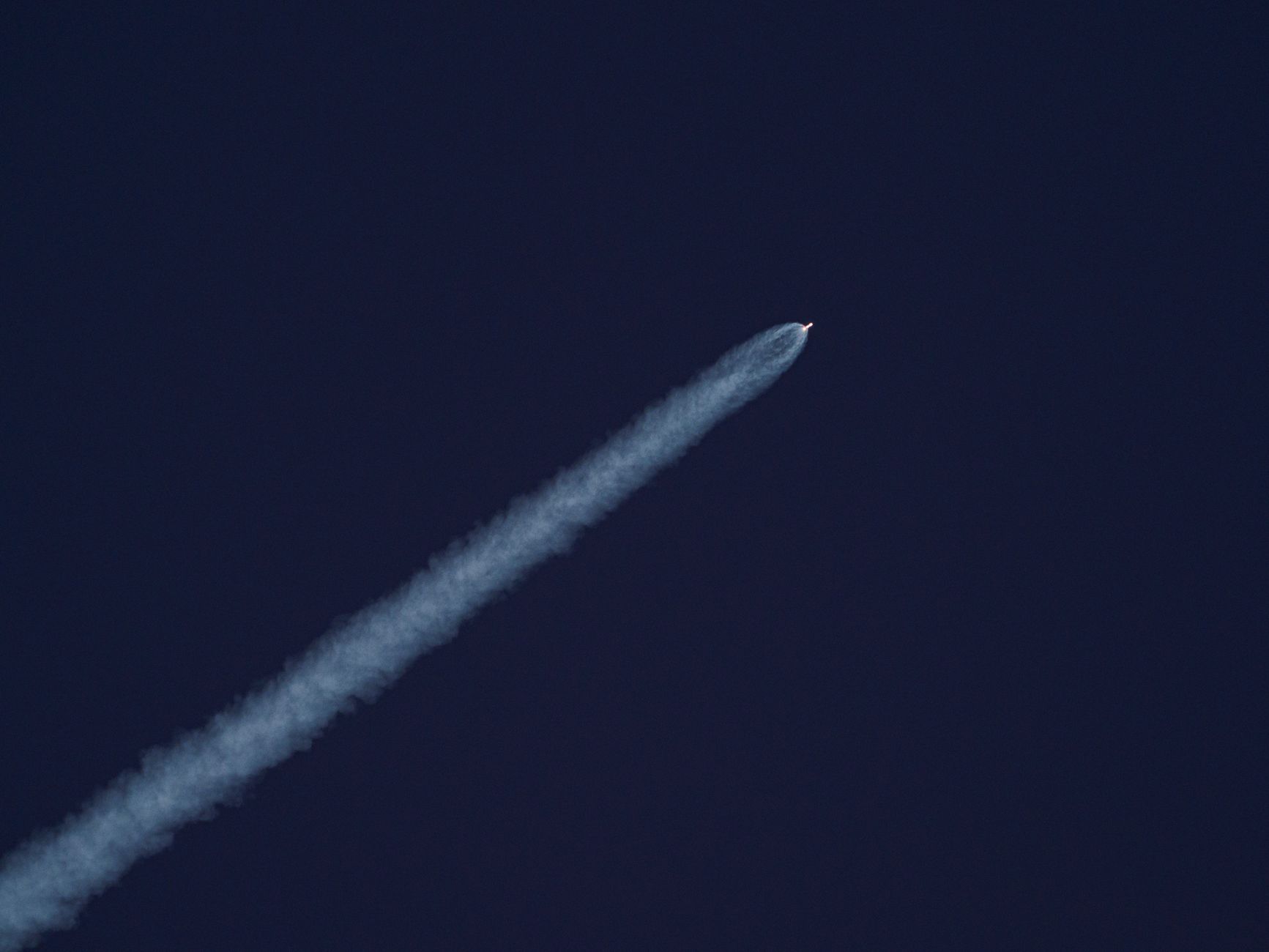
SpaceX Starship orbit is a groundbreaking achievement in aerospace history, showcasing the company’s resilience despite engine issues. This milestone opens new possibilities for future space exploration.
What Happened During the Launch?
During the recent launch of SpaceX’s Starship, a significant milestone was achieved as the spacecraft reached orbit for the first time. This event marked a pivotal moment in space travel, affirming the capabilities of the Starship program.
However, the journey was not without its challenges. Shortly after liftoff, there was an engine problem that raised concerns among the mission control team. Despite this setback, the crew remained focused and adaptive, working diligently to ensure the mission continued as planned.
Key moments during the launch included:
- The ignition of the engines, which propelled the Starship into the sky.
- The successful separation of stages, allowing the spacecraft to continue its ascent.
- The achievement of orbital velocity, confirming the launch’s success.
As the spacecraft completed its orbit, the SpaceX team celebrated this remarkable achievement. The successful launch of SpaceX’s Starship not only showcased groundbreaking technology but also paved the way for future missions and exploration beyond Earth.
This achievement stands as a testament to the hard work and innovation behind the project, highlighting the importance of the SpaceX Starship orbit as a proven milestone in the evolution of space travel.
Challenges Faced by SpaceX
SpaceX has faced numerous challenges on its journey to achieve a successful Starship orbit. Despite the recent milestone, the path to this achievement was fraught with difficulties that tested the company’s engineering and operational capabilities.
- Engine Issues: During the launch, SpaceX encountered significant problems with one of the engines. This malfunction posed a serious risk to the mission’s success and required rapid adjustments to the flight plan.
- Regulatory Hurdles: The company also navigated complex regulations set by government agencies. Compliance with safety protocols and environmental assessments delayed the timeline for the Starship’s development.
- Technical Setbacks: Throughout the testing phases, SpaceX experienced multiple test failures. These setbacks provided valuable data but also extended the development period.
- Public Scrutiny: With the world watching, any failure or delay was met with significant media coverage and public interest, adding pressure on the SpaceX team to deliver results.
Despite these challenges, SpaceX’s perseverance has paid off, culminating in the Starship’s successful orbit. The path forward remains ambitious, with further developments planned to enhance the spacecraft’s capabilities.
The Future of Space Exploration
The successful achievement of SpaceX Starship orbit marks a significant turning point in the realm of space exploration. This advancement not only showcases the capabilities of modern aerospace technology but also sets the stage for future missions beyond Earth.
With each successful launch, SpaceX solidifies its position as a pioneer in the industry, demonstrating that ambitious goals can be met with determination and innovation. The implications of reaching orbit extend far beyond commercial interests; they open doors for potential scientific research and interplanetary exploration.
Looking ahead, the future of space exploration is filled with possibilities:
- Interplanetary Missions: The Starship could pave the way for human missions to Mars and beyond.
- Satellite Deployment: Enhanced capabilities for launching satellites into various orbits.
- Space Tourism: Increased accessibility for civilians to experience space travel.
- Scientific Research: Opportunities for conducting experiments in microgravity environments.
As SpaceX continues to refine its technologies, the dream of exploring distant worlds becomes increasingly tangible. The success of the Starship’s orbital flight is just the beginning of a new era in humanity’s quest to explore the cosmos.
SpaceX Starship Orbit Achieved
In a groundbreaking achievement, SpaceX has successfully reached orbit with its Starship spacecraft, marking a significant milestone in the realm of space travel. This remarkable feat comes after extensive testing and multiple attempts, solidifying the Starship’s role as a pivotal player in future exploration missions.
Despite facing an engine problem during the ascent, the Starship demonstrated remarkable resilience, showcasing the engineering prowess of the SpaceX team. The spacecraft’s ability to overcome such challenges underscores the importance of iterative design and real-time problem-solving in aerospace technology.
As the Starship orbited the Earth, it provided invaluable data that will inform future missions and enhancements. The successful orbit not only demonstrates the vehicle’s capabilities but also sets the stage for upcoming projects, including crewed missions to the Moon and Mars.
Looking ahead, the implications of achieving a SpaceX Starship orbit are profound. This milestone opens new avenues for commercial space travel, scientific research, and international collaboration in space exploration. The industry eagerly anticipates the next steps as SpaceX continues to refine its technology and push the boundaries of what is possible in outer space.
- Successful orbit achieved despite challenges
- Data gathered for future improvements
- Potential for crewed missions to the Moon and Mars
The achievement of the SpaceX Starship orbit marks a significant advancement in our journey to explore beyond Earth. With this successful milestone, the possibilities for future missions in the SpaceX Starship orbit are truly limitless.
By jurvetson via Openverse