
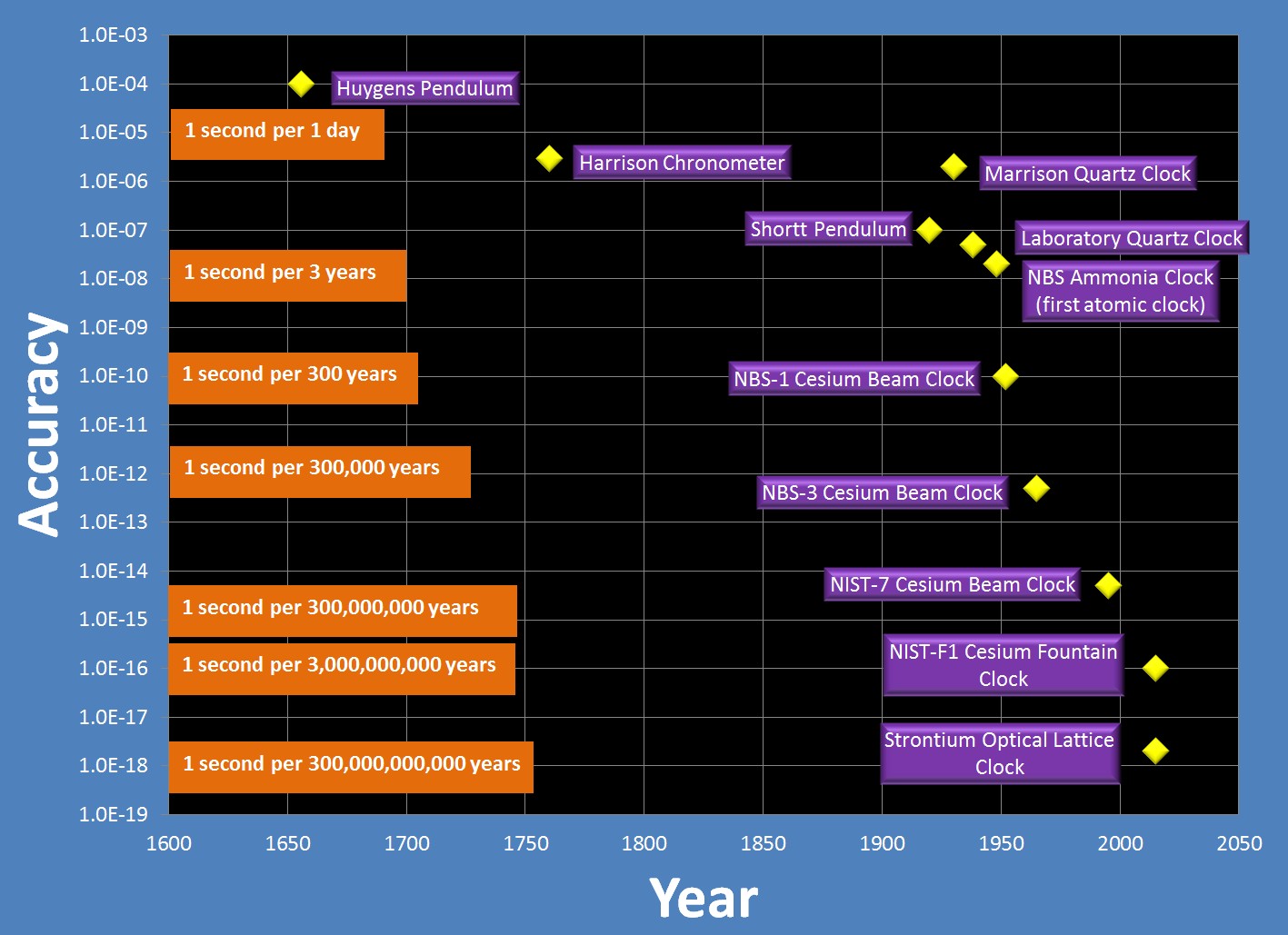
Atomic clock accuracy is at the forefront of technological advancements, with Singapore unveiling the world’s most precise atomic clock, surpassing both the US and China.
What Makes Singapore’s Atomic Clock Unique?
Singapore’s atomic clock stands out for its unparalleled precision and technological advancements, establishing it as a leader in the field of timekeeping. The unique features that contribute to its atomic clock accuracy include:
- Advanced Laser Technology: Utilizes cutting-edge laser cooling techniques to manipulate atoms, significantly enhancing stability.
- Innovative Design: The clock’s configuration minimizes environmental interference, ensuring that measurements remain consistent over time.
- International Collaboration: Singapore’s research teams work closely with global experts, integrating diverse insights and innovations.
- Robust Testing: Continuous evaluation and refinement processes ensure that the clock exceeds current standards.
As a result, Singapore’s atomic clock not only achieves remarkable accuracy but also sets a new benchmark, leaving rivals in the US and China striving to catch up.
Comparing Global Atomic Clock Technologies
As the race for precision in timekeeping intensifies, several countries are vying to develop the most accurate atomic clocks. Singapore’s atomic clock accuracy has set a new benchmark, outpacing technologies in the United States and China. While the US has long been a leader in atomic clock research, recent advancements in Singapore have showcased remarkable enhancements in stability and precision.
Key players in the global arena include:
- United States: Home to several leading research institutions, the US continues to innovate with optical lattice clocks.
- China: Rapidly advancing in quantum technologies, China is developing its own high-accuracy atomic clocks.
- Europe: European researchers collaborate on projects to enhance atomic clock capabilities across the continent.
Despite these efforts, Singapore’s advancements have solidified its reputation as a frontrunner in the atomic clock race.
The Future of Timekeeping: What’s Next?
The future of timekeeping is on the brink of a revolution, thanks to advancements in atomic clock accuracy. As Singapore leads the charge with its groundbreaking atomic clock technology, experts anticipate a series of developments that could redefine precision in various fields.
Upcoming innovations may include:
- Enhanced GPS systems that rely on more precise time signals for location tracking.
- Improved telecommunications networks benefiting from reduced latency and increased synchronization.
- Scientific research that demands unprecedented accuracy in measurements, especially in fundamental physics.
As other nations strive to catch up, Singapore’s commitment to pioneering such technologies ensures it will remain at the forefront of timekeeping advancements, shaping a future where accurate time measurement is integral to everyday life.
How Does an Atomic Clock Work?
Atomic clocks operate based on the vibrations of atoms, typically cesium or rubidium, which oscillate at a consistent frequency. This frequency serves as a precise timekeeping standard, allowing these clocks to measure time with unparalleled accuracy. In essence, an atomic clock counts the number of oscillations of atoms, translating these movements into time measurements.
To maintain such high levels of precision, atomic clocks are housed in controlled environments that minimize external influences, such as temperature fluctuations and electromagnetic interference. Additionally, advanced technologies, like lasers, are employed to manipulate and measure atomic states with extreme precision.
As a result, the atomic clock accuracy achieved by Singapore’s technology has set a new benchmark in the field, ensuring that it remains a leader in timekeeping innovations while surpassing its competitors in the global arena.
Implications for Science and Technology
The advancements in atomic clock accuracy have significant implications for various fields of science and technology. As Singapore’s atomic clock demonstrates unprecedented precision, it sets a new standard for timekeeping that could enhance global positioning systems, telecommunications, and even quantum computing.
Researchers and industries are now able to rely on this enhanced accuracy for applications that require synchronization over vast distances. Potential benefits include:
- Improved GPS accuracy for navigation and mapping services.
- Enhanced telecommunications systems for data transfer and connectivity.
- Advancements in scientific research, particularly in fields like fundamental physics and cosmology.
As nations strive to develop their own advanced timekeeping technologies, Singapore’s achievements illustrate the critical role of atomic clock accuracy in shaping the future of science and technology.
By Nathan Brewer via Openverse