
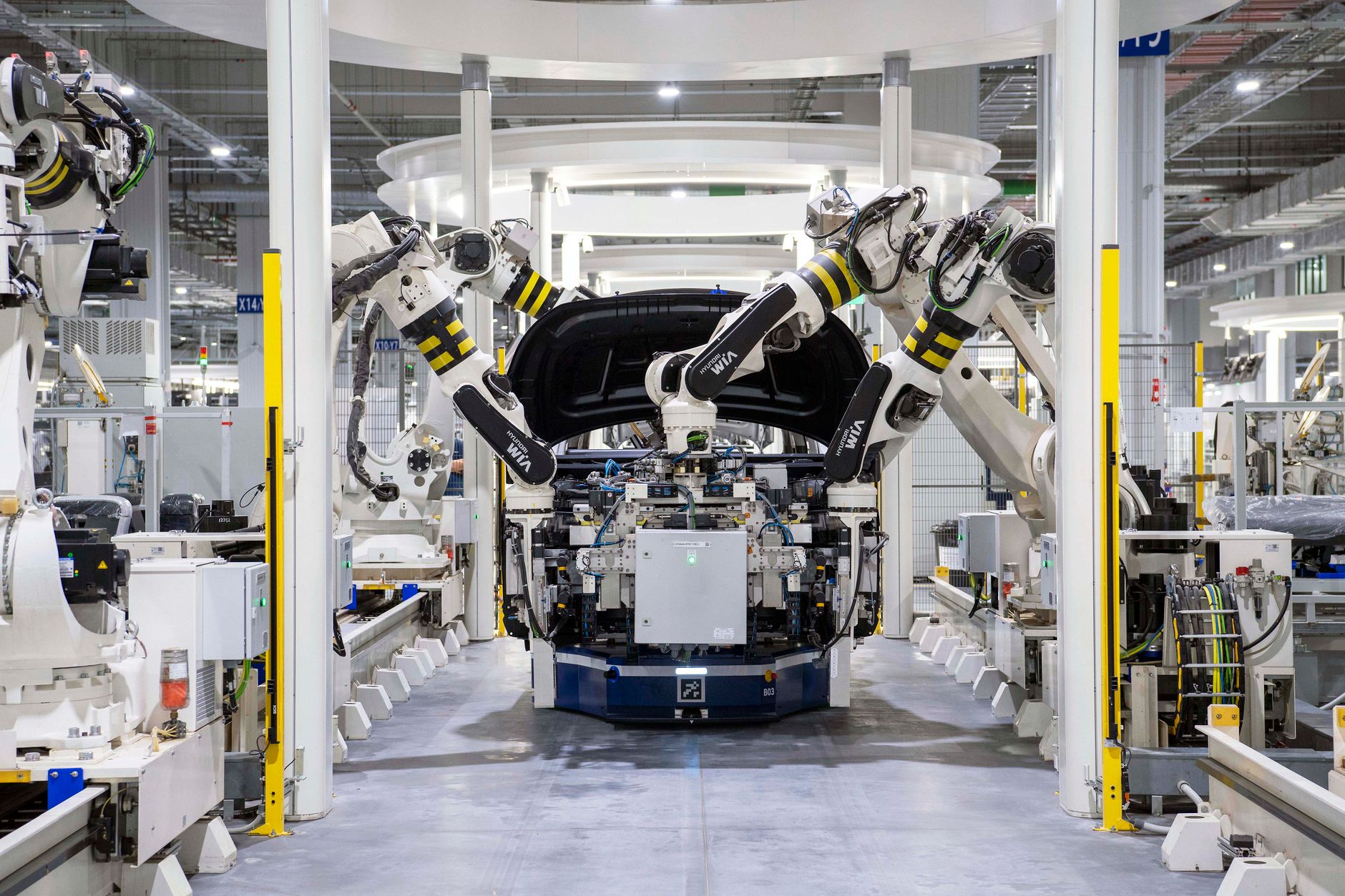
Xpeng robot-making line is revolutionizing the production of advanced humanoids. This innovative approach aims to enhance capabilities in robotics and artificial intelligence.
Overview of Xpeng’s robot-making line
Xpeng, the Chinese electric vehicle manufacturer, has recently unveiled its innovative robot-making line, aimed at advancing the development of humanoid robots. This state-of-the-art facility is designed to streamline the production process, allowing for greater efficiency and precision in creating advanced humanoid systems.
The new line showcases Xpeng’s commitment to integrating robotics into its product offerings, marking a significant step in the company’s expansion beyond traditional vehicles. By leveraging cutting-edge technology and automation, Xpeng aims to address the growing demand for humanoid robots in various sectors, including manufacturing, healthcare, and service industries.
Key features of Xpeng’s robot-making line include:
- Automated assembly processes that enhance production speed.
- Advanced AI integration for improved robot functionality.
- Quality control measures ensuring consistent performance and reliability.
As the market for humanoids continues to evolve, Xpeng’s robot-making line could position the company at the forefront of this emerging industry, potentially setting new standards for what humanoid robots can achieve.
Benefits of advanced humanoids
The introduction of Xpeng’s robot-making line marks a significant advancement in the development of humanoid robots, offering numerous benefits that could reshape various industries.
One of the primary advantages is the potential for enhanced efficiency in manufacturing processes. With advanced humanoids capable of performing complex tasks, companies could reduce operational costs and increase production speed.
Additionally, these robots can work in environments that may be hazardous for humans, thereby improving workplace safety. By taking over repetitive or dangerous tasks, advanced humanoids allow human workers to focus on more creative and strategic roles.
Moreover, Xpeng’s robot-making line is designed to produce robots that can learn and adapt over time. This flexibility enables them to handle a variety of tasks, from customer service to healthcare assistance, making them invaluable in diverse settings.
Furthermore, the integration of advanced humanoids can lead to innovations in human-robot interaction, enhancing user experience and acceptance of robotic assistance. In summary, the benefits of Xpeng’s robot-making line could position it as a leading solution for the future of humanoids.
How Xpeng is leading in robotics
Xpeng is positioning itself as a key player in the robotics industry with its innovative robot-making line. This strategic move not only showcases the company’s commitment to technological advancement but also highlights its potential to revolutionize the production of advanced humanoid robots.
By developing a robust manufacturing process specifically tailored for humanoids, Xpeng is setting new standards in efficiency and precision. The integration of cutting-edge automation and artificial intelligence in the production line allows for faster turnaround times while maintaining high-quality standards. This focus on quality is crucial, as the demand for sophisticated humanoid robots continues to grow across various sectors.
Moreover, Xpeng’s approach emphasizes collaboration between human workers and robotic systems. This synergy is aimed at enhancing productivity and ensuring that the final products meet the diverse needs of consumers. Industry experts believe that the Xpeng robot-making line could serve as a model for other companies looking to enter the humanoid robotics market.
In conclusion, Xpeng’s advancements in robotics not only solidify its position as an industry leader but also pave the way for future innovations in humanoid technology.
Challenges in humanoid production
The journey towards producing advanced humanoids is fraught with challenges that the industry must navigate. Xpeng’s robot-making line aims to address several of these issues, yet hurdles remain that could impact its effectiveness.
One significant challenge is the complexity of humanoid design. Creating robots that can mimic human movements and behaviors requires sophisticated engineering and programming. This complexity often leads to prolonged development cycles and potential cost overruns.
Additionally, scalability is a critical concern. While Xpeng’s robot-making line may be state-of-the-art, producing humanoids at scale poses logistical and manufacturing challenges. Ensuring consistent quality while ramping up production speeds is essential for market viability.
Moreover, there are ethical considerations surrounding humanoid robots. As these machines become more integrated into society, questions arise about their roles and the implications for employment and human interaction.
- Design complexity leading to longer development timelines
- Scalability issues impacting production efficiency
- Ethical dilemmas regarding human-robot interaction
Ultimately, while Xpeng’s robot-making line showcases innovation, addressing these challenges will be crucial for the future of humanoid robotics.
Future of AI and robotics in China
The future of AI and robotics in China is poised for significant transformation, particularly with initiatives like the Xpeng robot-making line. As the country embraces advanced technologies, the integration of AI in robotics is becoming increasingly crucial. This evolution is driven by several factors that could redefine industries and societal roles.
First, the demand for automation is rising, prompting companies to explore humanoid robots capable of performing complex tasks. These robots are not only designed to enhance efficiency but also to address labor shortages in various sectors.
- Innovation in AI: Continuous advancements in artificial intelligence are enabling robots to learn and adapt in real-time, making them more effective in diverse environments.
- Investment in Research: Significant funding from both the government and private sectors fuels research and development, fostering a competitive robotics ecosystem.
- Global Leadership: China’s commitment to becoming a leader in AI and robotics positions it favorably on the international stage, with companies like Xpeng leading the charge.
As China navigates the future of AI and robotics, the Xpeng robot-making line stands out as a potentially pivotal solution for the challenges of humanoid production and integration into everyday life.
The Xpeng robot-making line has been designed to enhance efficiency and precision in the production of humanoid robots. As the industry evolves, the Xpeng robot-making line may prove to be the best solution for humanoids by integrating advanced technologies and automation.
Photo by Hyundai Motor Group on Pexels